Tiếng Việt


How to calculate chargeable weight for air freight shipments
Chargeable weight calculation for air freight shipments
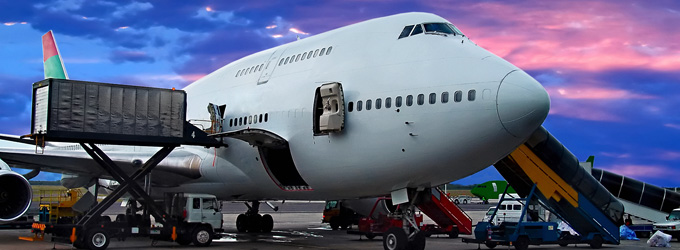
Based on the fact that the amount of cargo that can be loaded on an aircraft, is limited by weight and volume
Heavy and small loads (also called: “high density cargo”) will tend to reach the weight limitation of the aircraft before the volume limitation is attained.
Light and bulky loads (also called: “low density cargo”) will reach the volume limitation of the aircraft before the weight limitation is attained.
Therefore, International Air Transport Association (IATA) issue regulations on how to calculate an item’s chargeable weight. For high density cargo, chargeable weight is gross weight; for low density cargo, chargeable weight is volume weight.
Details are as below:
High density cargo:
Hight density cargo is cargo which weights more than 1kg per 6000 cm3 or per 366 cu.in or more than 1 pound per 166 cu.in.
For high density cargo, chargeable weight is gross weight
The gross weight (also referred to as actual gross weight) is the weight of the shipment including packaging.
Dealing with Fractions:
For gross weight in kilograms
The fraction above a half kilogram (0.51 to 0.99 kg) is rounded up the next higher full kg
If the fraction is exactly 0.5 kg, it is not rounded-off
A smaller fraction (0.1 to 0.4 kg) is rounded up to the next half kg (0.5 kg)
For gross weight in pounds
Fractions of a pound is rounded up to the next higher full lb
Low density cargo
Low density cargo is cargo that weights less than 1kg per 6000 cm3 or per 366 cu.in or less than 1 pound per 166 cu.in.
For low density cargo, chargeable weight is volume weight
Volume weight is determined as below:
Measure the piece along its greatest length, greatest width and greatest height regardless of its geometric shape.
Round off dimensions:
Centimeter (cm)
0.5 to 0.9 cm is rounded up to the next higher whole centimeter
0.1 to 0.4 cm is rounded down to the next lower whole centimeter
Inch (in.)
From 1/2 up (1/2, 5/8, 3/4, 7/8 in.) is rounded up to the next higher whole inch.
A smaller fraction (1/8, 1/4, 3/8 in.) is rounded down to the next lower whole inch.
So , answer the question :How to calculate chargeable weight for air freight shipments
The Chargeable Weight of Air Freight shipments are calculated as the Gross Weight) or the Volume Weight of the shipment, whichever is the greater.
For air cargo shipments:
Volume weight = Volume : 6000
(unit: Cm3)
or in simple way: 1 CBM have volume weght 166,67 kg
For express shipment:
Express firms (e.g Fedex, DHL…) normally calculate volume weight as below
Volume weight = Volume : 5000
(unit: Cm3)
or in simple way: 1 CBM have volume weght 200 kg
Example on calculation chargeable weight for air shipments:
The item have volume 2 CBM, gross weight 300 kg
For cargo shipment:
-> volume weight: 2.000.000 : 6000 = 333.33 kg (or in quick caculation: 167 x 2 = 334 kg) > 300 kg -> chargeable weight is 333.33 kg
By express firms:
-> volume weight: 2 x 200 kg = 400 kg > 300 kg -> chargeable weight is: 400 kg
Công ty TNHH HP Toàn Cầu
Nhà cung cấp Dịch vụ Vận chuyển quốc tế và thủ tục hải quan
Địa chỉ: Số 13, LK3 – NO03 – Khu đô thị Văn Khê – Phường Hà Đông – Hà Nội
Website : hptoancau.com
Email: info@hptoancau.com
Điện thoại: 024 3 73008608/ Hotline:0886115726 – 0984870199
hoặc yêu cầu báo giá theo link
Lưu ý:
– Nội dung bài viết mang tính chất tham khảo, trước khi sử dụng, bạn nên liên lạc HP Toàn Cầu để check lại xem có cập nhật gì mới không.
– HP Toàn Cầu giữ bản quyền với bài viết và không đồng ý đơn vị khác sao chép, sử dụng bài viết của HP Toàn Cầu vì mục đích thương mại
– Mọi sự sao chép không có thỏa thuận với HP Toàn Cầu (kể cả có ghi dẫn chiếu website hptoancau.com) có thể dẫn đến việc chúng tôi claim với google và các bên liên quan.